The 30-Second Scene That Outperformed the Whole Season

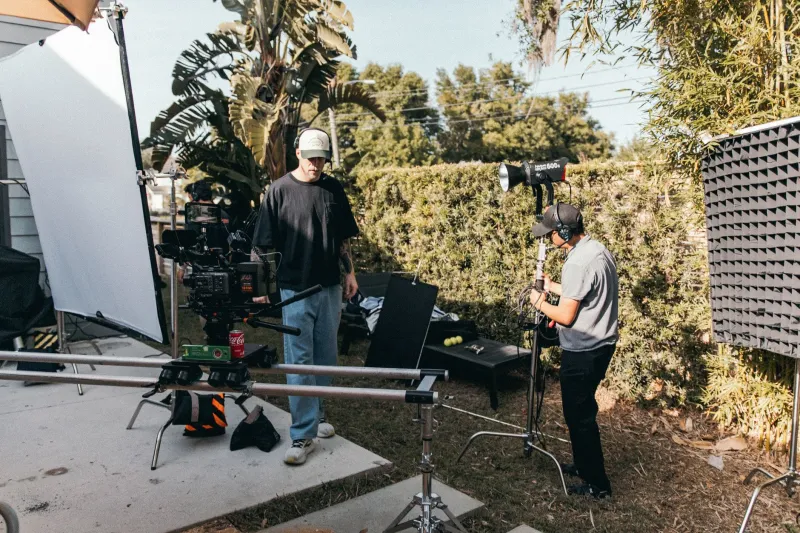
Photo: Don Ramey Logan, CC BY-SA 4.0, via Wikimedia Commons
Last year, I watched a clip from a show I'd never seen before get recommended to me four separate times in one afternoon. It was maybe 45 seconds long — a single scene, dialogue-heavy, emotionally devastating. I cried a little. I shared it. I added the show to my watchlist and then, if I'm being completely honest with myself, never actually watched it.
I'm probably not alone in that experience. And that gap — between the clip and the commitment — is where a lot of the most interesting questions in entertainment are living right now.
The Clip Economy Is Real
Let's just put the numbers on the table. TikTok has over 170 million users in the US alone. Short-form video content drives an enormous amount of cultural conversation — arguably more, at this point, than traditional press coverage or even word-of-mouth. A single scene from Succession, Abbott Elementary, or The Bear can generate millions of views and thousands of reaction videos before most people have even sat down to watch the actual episode.
Networks and streaming platforms have noticed. Some are now deliberately engineering "clip-able" moments — scenes constructed specifically to function as standalone emotional or comedic units that will travel well on social media. There are production meetings where people are asking, essentially, "what's the TikTok moment in this episode?" That's a real thing that happens now.
And look, I get why. If a 30-second clip drives 50,000 new subscribers to your platform, that's a measurable return on a very specific creative investment. The math makes sense.
But I keep coming back to that show I added to my watchlist and never watched. Because I got the emotional hit. I got the conversation piece. I got enough to feel culturally caught up. What exactly was I missing?
What Actually Lives in the Margins
Here's the case for the full episode — and I mean the real case, not the nostalgic "things were better before" version.
The moments that become clips are almost always peaks. They're the punchlines, the confrontations, the confessions, the breakdowns. They're built to hit hard and they do. But peaks only register as peaks because of everything that came before them. The slow accumulation of character detail. The tension that's been building for three episodes. The throwaway line in episode two that pays off in episode seven.
The Bear is a perfect example of this. The "Fishes" episode from season two became a cultural moment — genuinely one of the most discussed single episodes of television in recent memory. Clips from it went everywhere. But if you watched that episode without having spent time with those characters, without understanding the specific texture of that family's dysfunction, a lot of it just lands as "well-acted chaos." The full context is the whole point.
Same with Severance. The show's premise is inherently clip-resistant because the unsettling payoff requires you to have lived inside that world for a while. You can't really clip the dread. You have to earn it.
So there's something real being lost when we consume entertainment primarily through its most extractable moments. We're getting the highlight without the architecture.
But Let's Not Be Precious About This
At the same time — and I want to be clear about this — not every show deserves 45 minutes of your attention per episode. Some of them are genuinely padded. Some streaming series have been stretched to eight or ten episodes because that's what the licensing deal required, not because the story needed that much room.
If a clip from episode six is the only thing worth watching in a season, maybe the problem isn't the clip economy. Maybe the problem is the season.
TikTok has a brutal kind of honesty built into it. When a 30-second scene generates more genuine emotional response than the surrounding hour of content, that's information. Creators and studios who are listening carefully to that signal — not to chase virality, but to understand what's actually landing with audiences — are getting useful feedback.
The fragmentation of entertainment consumption is also creating space for things that genuinely work in short form. Some stories are better as a single scene than a series. Some performances deserve to exist as standalone moments. Not everything needs to be a prestige drama.
Where This Leaves Us
I think the honest answer is that we're in a transitional moment where the tools of distribution have outpaced our cultural frameworks for thinking about them. We haven't figured out yet what it means to have an emotional relationship with a piece of content you never fully consumed. We haven't decided whether a clip that makes you feel something "counts" as engaging with the art.
What I keep coming back to is intention. There's a difference between a creator who builds a show with genuine narrative depth and accepts that some of it will travel as clips, and a creator who reverse-engineers episodes from the clip backward. The former feels like art with a distribution strategy. The latter feels like content with a thin story wrapped around it.
Audiences are getting pretty good at sensing the difference, even if they can't always articulate it. The shows that generate the most enduring clip culture — the ones people return to, argue about, and rewatch — tend to be the ones where the clips are genuinely the tip of a very deep iceberg.
Thirty seconds can be a doorway or a destination. Right now, we're collectively deciding which one we actually want it to be.