When the Mask Slips: The Celebrity Interview Moments That Rewrote Public Narratives
There's a specific kind of electricity that crackles through a room — or a screen — when a celebrity says something they probably weren't supposed to say. No talking points, no crisis PR filter, just a real human being fumbling through a question they didn't prep for. And honestly? Those are the moments we remember forever.
We live in an era where every word a public figure utters can be clipped, looped, and dissected on TikTok within the hour. That should make celebrities more guarded. And yet, the interviews that actually move the needle — the ones that shift public perception, spark think pieces, and trend for days — are almost always the unscripted ones.
The Vulnerability Economy
Something changed in American entertainment culture around the mid-2010s. The glossy, perfectly rehearsed press junket answer started feeling hollow. Audiences grew up. They got savvier. They started calling out canned responses in real time. And slowly, the entertainment industry began to realize that polish wasn't the same thing as connection.
When Channing Tatum stumbled through a question about his insecurities on a late-night talk show, laughing at himself and visibly caught off guard, the clip went viral not because he said something scandalous — but because he seemed real. When Cate Blanchett pushed back on an interviewer's condescending question with sharp, unblinking calm, audiences didn't just admire her — they rallied behind her. These weren't PR wins engineered in a boardroom. They were accidents that became assets.
Authenticity, it turns out, is the most valuable thing a celebrity can offer right now. And ironically, it's the thing you can least fake.
The Moments That Made Careers
Let's talk about Jennifer Lawrence for a second. Back when she was first becoming a household name, she tripped on the stairs at the Oscars. Her response — laughing, self-deprecating, completely unbothered — didn't tank her image. It launched it into a different stratosphere. America adopted her overnight. She wasn't just an actress anymore; she was relatable.
Similarly, when Timothée Chalamet gave an interview where he openly discussed the anxiety of navigating sudden fame at a young age, something shifted. He wasn't performing humility — he was wrestling with it in real time, on camera. Audiences responded not with pity, but with genuine affection. The vulnerability made him more compelling, not less.
On the flip side, there are interviews that have done real damage. The carefully constructed public image that unravels under a probing question. The moment a star snaps, or dismisses a question with visible contempt, and the internet collectively raises an eyebrow. These moments don't disappear — they become part of the permanent record.
What Viral Interview Clips Actually Reveal
Scroll through YouTube or TikTok on any given week and you'll find a dozen interview clips being dissected in comment sections with the intensity of a graduate seminar. People aren't just watching — they're analyzing. Body language. Pauses. The way someone laughs when they're uncomfortable versus when they're genuinely amused. American audiences have become remarkably fluent in reading between the lines.
This is partly a response to years of over-produced celebrity content. We've been sold so many carefully curated images that the genuine article now feels almost startling. When an interview goes sideways — or beautifully, unexpectedly right — it cuts through the noise in a way that a polished magazine cover simply can't.
Recent viral moments, like Pedro Pascal's warm and slightly chaotic energy across multiple press tours, or the way Zendaya navigates intrusive questions with such composed grace, show two different versions of the same truth: audiences are drawn to people who seem to actually exist beyond their publicist's talking points.
The New Rules of Media Appearances
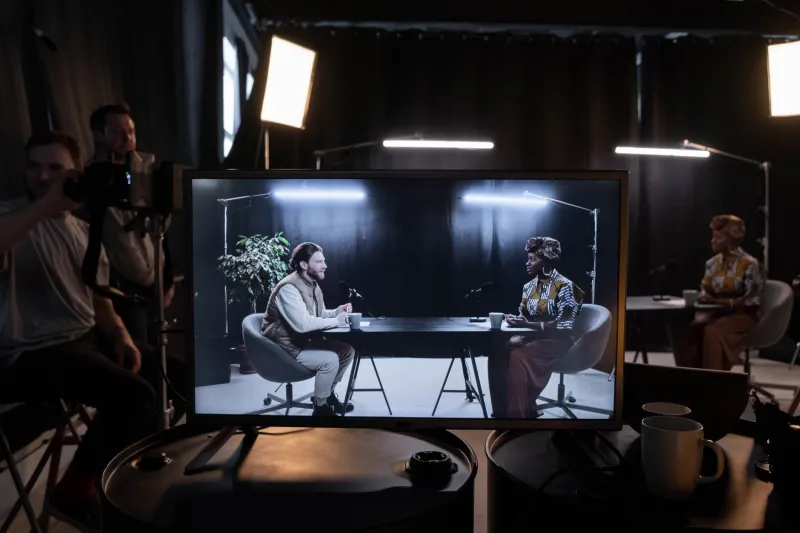
So what does this mean for how celebrities approach press? Increasingly, the smartest ones are leaning into the mess. They're choosing interview formats that allow for longer, more winding conversations — podcasts, long-form sit-downs, unstructured YouTube chats — over the tight, controlled soundbite environments of traditional press.
Shows like Hot Ones have built entire empires on this principle. Put a celebrity under mild (or extreme) physical discomfort, ask them genuinely interesting questions, and watch what happens. The format strips away the artifice. And the results are almost always more interesting than anything a press release could generate.
The takeaway for anyone watching the entertainment industry closely? The future of celebrity media isn't about controlling the narrative. It's about being interesting enough — and human enough — that the uncontrolled moments work in your favor anyway.
Why We Keep Watching
At the heart of all this is something deeply human. We watch celebrities because we're curious about what it's like to live a life so different from our own. But we connect with them when we catch a glimpse of something familiar — the nervousness, the self-doubt, the weird laugh that comes out when you're caught off guard.
The most memorable interview moments in Hollywood history aren't the ones where everything went according to plan. They're the ones where it didn't — and someone was brave enough, or just human enough, to let us see that.
That's the art of the awkward interview. And honestly, long may it continue.